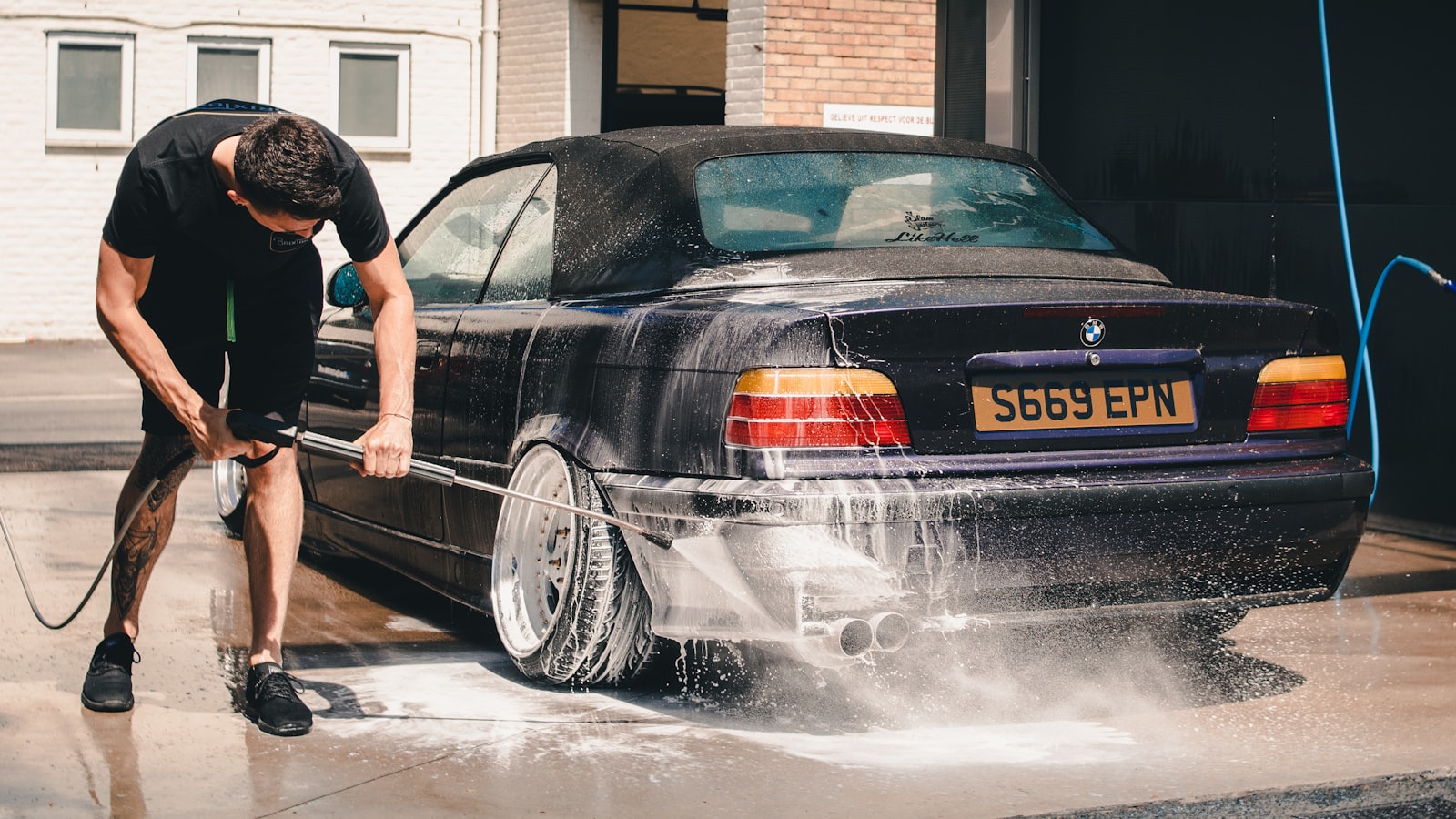
A clean car simply feels better to own and drive, but there's more going on than looks. Your paint is a thin, layered surface, and the clear coat on top is what gives it depth and shine while shielding the color beneath. Look after that layer and the car stays sharp for years; neglect it and it dulls, fades, and picks up a haze of fine scratches.
Here's the part that surprises people: most of the swirls and scratches you see on older cars didn't come from bushes or stray shopping carts. They came from washing the car the wrong way, dragging trapped grit across the paint again and again. Get the method right and you avoid nearly all of that, no special skill required.
Why washing technique matters#
Every time you wipe a dirty surface, you're moving whatever's sitting on it. On paint, that means road grime, sand, and tiny bits of grit acting like sandpaper against the clear coat. A sponge that picks up dirt and then gets rubbed back and forth is essentially polishing scratches into the finish.
The whole point of a good wash routine is to lift dirt away from the paint and rinse it out of your mitt before it can do damage, rather than grinding it back in. That single idea, keeping grit off the paint and out of your mitt, is what separates a wash that protects your car from one that slowly ruins it. Everything below is built around it.
The two-bucket method#
The two-bucket method is the standard approach for a reason: it's simple, cheap, and it works. You'll need two buckets, a proper wash mitt, and a dedicated car shampoo rather than dish soap, which is harsh enough to strip protection off the paint.
Fill one bucket with your shampoo mix and the other with plain clean water. The soapy bucket is for washing; the plain one is for rinsing the grit out of your mitt between passes. Then work through it in order:
- Rinse the whole car first with a hose to knock off loose dirt and grit
- Dip the mitt in the soapy bucket and wash one section, working top to bottom
- Rinse the mitt thoroughly in the plain-water bucket before reloading it with soap
- Move down the car panel by panel, saving the filthy lower areas and wheels for last
- Rinse each section before the soap dries, especially on a warm day
Washing top to bottom matters because the lowest parts of the car are always the dirtiest. If you do the wheels or lower doors first, you'll load your mitt with heavy grit and then carry it up onto cleaner, more visible panels. Some people keep a separate mitt just for wheels for exactly this reason.
The single habit that saves your paint is rinsing the mitt in clean water every single time before you go back for more soap. Skip it and you're just relocating grit; do it and the dirt ends up in the bucket instead of on your car.
Dry it the right way#
Letting a car air-dry seems easy, but it's a mistake. As the water evaporates it leaves behind spots from minerals in your water supply, and those can be stubborn to remove later. Drying by hand also gives you a last chance to lift off any grit the rinse missed, gently.
Use a large, soft microfiber towel or a dedicated drying towel, both of which hold a lot of water and glide over the surface. Pat and drag lightly rather than scrubbing, and turn to a clean part of the towel as it gets wet. Avoid old bath towels or anything rough, since they can leave marks of their own. In direct sun on a hot day, work quickly or move the car into the shade, because paint that's baking will spot before you can dry it.
Add a layer of protection#
A clean car is good; a clean, protected car is better and stays that way longer. Wax or sealant lays down a sacrificial layer over the clear coat that helps water bead and roll off, makes dirt easier to rinse away next time, and adds a bit of defense against sun and contamination.
There are two common choices for a home owner. A traditional carnauba wax gives a warm, deep shine and is satisfying to apply, though it doesn't last especially long. A synthetic sealant tends to protect for longer and is often easier to use, trading a touch of that classic glow for durability. Newer spray-on products and ceramic-style coatings sit somewhere in between, and a simple spray sealant applied after each wash is an easy way to keep protection topped up.
Whatever you choose, apply it to clean, dry paint in the shade, using a thin, even coat and following the product's directions. Less is usually more, and buffing off a haze of dried wax with a clean microfiber towel is what brings up the shine. Reapplying a couple of times a year keeps the barrier working, and it makes every wash between coats quicker.
This protective habit pays off in more than looks. Well-kept paint holds its value, which matters if you ever sell, so it's worth reading how to sell your car for a fair price with presentation in mind. Protection also earns its keep in harsh conditions, and a fresh coat before the cold season is a smart move covered in how to prepare your car for winter, when road salt goes to war with your finish.
Build a light routine#
You don't need to detail your car every weekend. A regular gentle wash every couple of weeks, or sooner after rain, road salt, bird droppings, or tree sap, keeps contaminants from etching into the clear coat. Dealing with those droppings and sap promptly is one of the highest-value small habits, since they can mark paint permanently if left in the sun.
Keep your wash gear clean and stored properly too. A mitt dropped on the driveway has picked up grit and belongs in the wash, not back on your paint. Wash your microfiber towels separately from household laundry and skip the fabric softener, which clogs the fibers.
Caring for paint is one of those jobs where doing it right is barely harder than doing it wrong, and the payoff compounds over years. Two buckets, a soft touch, a proper dry, and a layer of protection add up to a car that keeps its shine and its value. Give it an hour now and then, and the finish will thank you every time you walk up to it.