The word "hybrid" gets used loosely, and it causes a lot of confusion at the dealership. Some hybrids you plug in, some you never do, and a full electric car is a different thing again. Buyers often walk in unsure which is which.
The distinctions actually matter, because these three types of car suit very different lives. Get the match right and you save money and hassle; get it wrong and you either lug around an engine you rarely use or run short of range you actually needed. Here's how they differ in plain terms.
The regular hybrid#
A standard hybrid, sometimes called a self-charging hybrid, pairs a normal petrol engine with a small battery and electric motor. You never plug it in. Instead, the car tops up its little battery as you drive, mostly by capturing energy when you slow down, and uses the electric motor to help out at low speeds and smooth over the moments when engines are least efficient.
The point of this setup is efficiency, especially in town. In stop-and-go traffic, the car can creep along on electricity and shut the engine off when it isn't needed, which saves fuel and cuts noise. On the motorway, it mostly behaves like an ordinary petrol car, because the small battery can't do much at sustained speed.
A regular hybrid asks nothing new of you. You fill it with petrol like any other car, there's no charging to think about, and it just quietly uses less fuel than the equivalent non-hybrid. For that reason, it's the gentlest step away from a conventional car.
Where it disappoints is on long, steady motorway runs. The electric side does most of its useful work at low speed and during braking, so a car that spends its life on the open road sees a smaller benefit than one that crawls through town every day. If your driving is mostly high-speed cruising, a regular hybrid saves less than the brochure suggests, and a modern diesel or an efficient petrol might do nearly as well.
The plug-in hybrid#
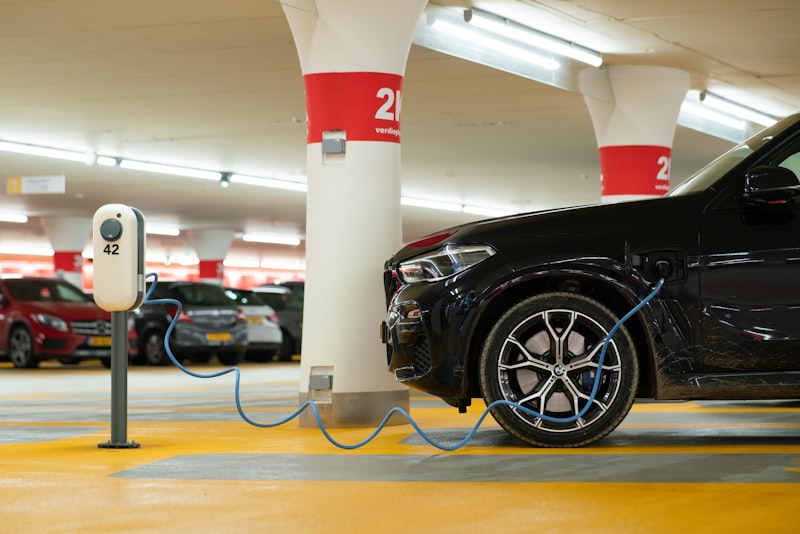
A plug-in hybrid, or PHEV, sits in the middle. It has a bigger battery than a regular hybrid and, as the name says, you plug it in to charge. That larger battery lets it drive a modest distance, often enough for many people's daily errands, on electricity alone. When the battery runs down, the petrol engine takes over, so you never worry about being stranded.
On paper this looks like the best of both worlds, and for the right driver it genuinely is. The catch is that a plug-in hybrid only delivers on its promise if you actually plug it in. Owners who never charge theirs end up hauling a heavy battery around while running almost entirely on petrol, which is the worst of both setups.
A plug-in hybrid tends to suit someone whose daily driving fits within the electric range and who can charge regularly, but who also takes occasional longer trips and wants an engine as backup. If that's you, it's worth reading how to charge an EV at home, because a plug-in hybrid rewards a solid home charging habit just as a full electric car does.
The full electric car#
A full electric car, or BEV, has no petrol engine at all. It runs entirely on a large battery and electric motor, and the only way to refill it is to charge. That removes fuel, oil changes, and a long list of engine parts from your life, at the cost of needing to think about charging.
This is the cleanest and simplest machine of the three mechanically, but it's also the one that most depends on your circumstances. Without convenient charging, a full electric car becomes a chore; with it, the daily experience is genuinely easy and quiet.
It's also the type that rewards a change in habits the most. There's no engine to fall back on, so you plan around charging rather than fuel stops, and long trips need a little forethought. In exchange you get instant, silent response, the lowest running costs of the three when you charge at home, and the shortest service list. Owners who have the right setup rarely want to go back; those without it tend to find it more trouble than it's worth.
Here's the quick version of who each type suits:
- Regular hybrid: you can't charge anywhere and just want better fuel economy with zero change to your routine
- Plug-in hybrid: you can charge sometimes, do short daily trips, but still want an engine for the occasional long haul
- Full electric: you can charge reliably where you park and most of your driving is predictable
Cost, maintenance, and the honest trade-offs#
The three types line up differently on running costs and upkeep, and none is a clear winner for everyone.
A regular hybrid keeps a full petrol engine, so it needs the same oil changes, spark plugs, and exhaust maintenance as any petrol car, plus the extra complexity of the hybrid system. A plug-in hybrid carries all of that too, arguably more, since it has both a full engine and a sizeable battery to look after. A full electric car sheds most engine servicing entirely, which is why the routine maintenance list is the shortest of the three.
The trap with plug-in hybrids is buying one for the electric range and then not charging it. If you know you won't plug in regularly, a plain hybrid is often the more honest and cheaper choice.
Upfront prices, resale values, and any local incentives shift the sums further, and they change over time and by region, so it's worth checking the current picture rather than relying on old assumptions. If you're weighing one of these against a conventional car, the same broader buying trade-offs are worth thinking through alongside the fuel type.
Choosing what fits your life#
Strip it all back and the decision hinges less on the technology and more on you. How far do you drive on a normal day? Can you charge where you park, and how often? How many long trips do you really take, and how much does the safety net of an engine matter to you?
Answer those honestly and the right category usually becomes obvious. There's no prize for buying the most advanced option if it doesn't match your routine, and no shame in a plain hybrid if that's what your situation calls for.
It's also worth thinking a step ahead. If you can't charge at home today but expect to move somewhere you can, or your area is quickly adding chargers, a full electric car might make sense sooner than it seems. If your life is likely to stay the same and charging just isn't practical, forcing the issue rarely ends well. Buy for the situation you're actually in, with a realistic eye on where it's heading. If you're leaning toward going fully electric, is an electric car right for you takes the same practical questions a step further.